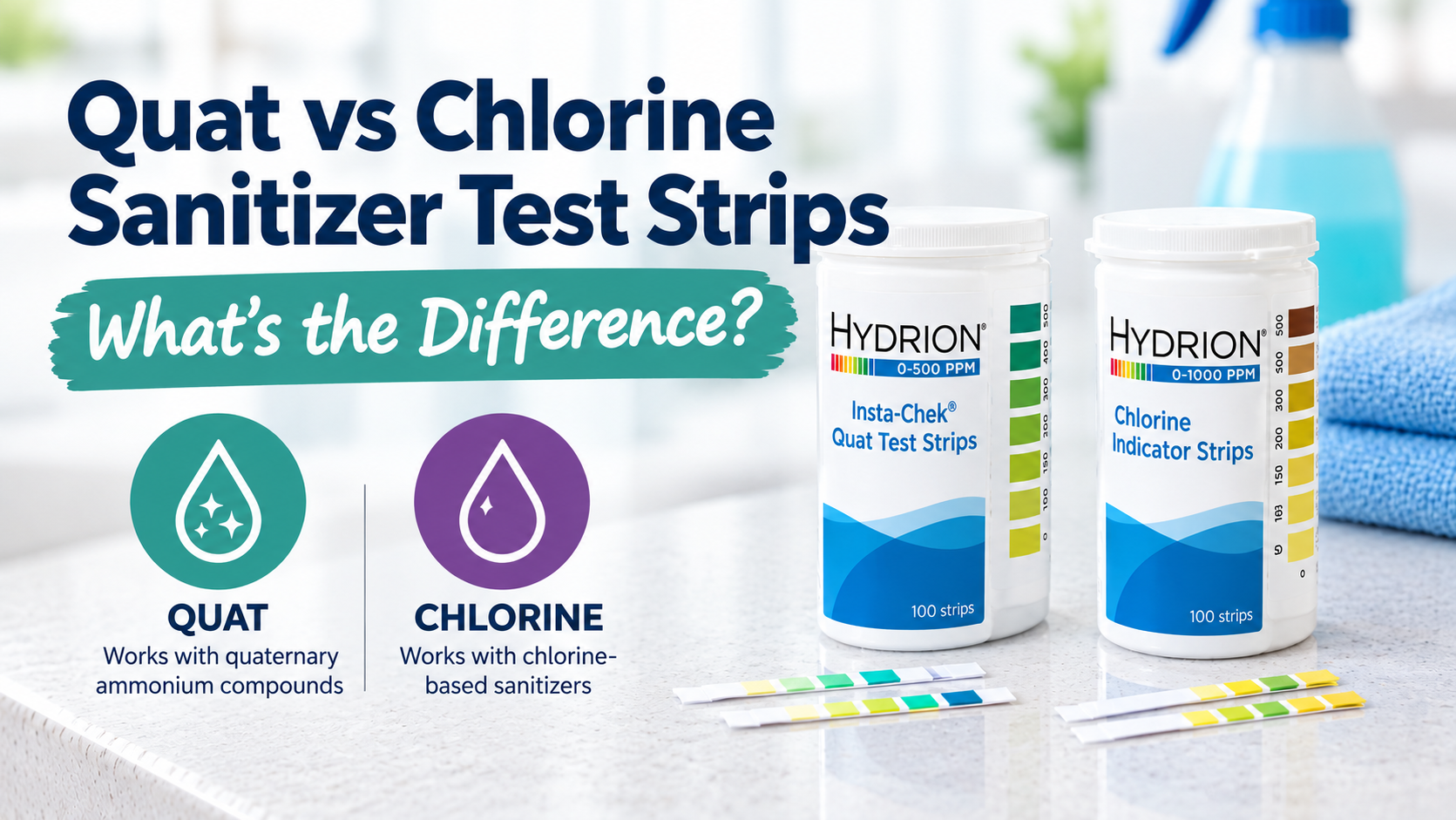
Quat vs Chlorine Sanitizer Test Strips, What's the Difference
Grab the wrong test strip and your sanitizer reading stops meaning anything, even if the concentration in the bucket is dead on. That's the trap with quat and chlorine sanitizers. They work in completely different ways, and a chlorine strip won't read a quat solution correctly, or the other way around.
What's the Difference Between Quat and Chlorine Sanitizer
Quaternary ammonium, usually called quat, and chlorine are the two most common sanitizers used in restaurants, cafeterias and food processing plants. Both kill bacteria on contact surfaces, but they're chemically nothing alike.
Chlorine sanitizer, usually made from bleach, breaks down fast and needs frequent remixing throughout a shift. Quat sanitizer is more stable, holds its concentration longer, and won't corrode metal the way chlorine can over time.
Chlorine strips use a color change reaction tied to chlorine's oxidizing properties. Quat strips react to the ammonium compounds themselves. Swap them and you'll get a false reading, or no reading at all.
Why the Right Test Strip Matters So Much
A mismatch between sanitizer and test strip happens more than people think, especially in kitchens that switch suppliers or products without retraining staff on what strip goes with what solution. Say a kitchen moves from chlorine to a quat based sanitizer because quat holds its concentration longer and needs remixing less often. If the old chlorine strips stay in the drawer, every reading after that switch is wrong. The sanitizer isn't the problem. The strip is.
How to Tell Which Test Strip You Need
Check your sanitizer label first. It'll list the active ingredient, either quaternary ammonium compounds or sodium hypochlorite, which is chlorine. Then match your test strip to that ingredient.
A few quick markers to look for:
- Chlorine sanitizer usually smells like bleach and needs mixing daily
- Quat sanitizer often has a mild odor and mixes into a stable solution that lasts through a shift
- Test strip packaging always states which sanitizer type it's built for, so check the box, not just the color
Can One Strip Test Both Sanitizers
No, not accurately. Some suppliers sell dual kits with separate strips for each chemical in one box, but no single strip chemistry reads both quat and chlorine correctly. If your kitchen uses both for different tasks, keep both strip types stocked and labeled clearly so staff grab the right one without guessing.
What Happens If You Use the Wrong Strip
Best case, you get an unreadable strip and waste a test. Less ideal, you get a false pass, log a sanitizer concentration that's actually too weak, and leave surfaces under sanitized without knowing it. Health inspectors check sanitizer logs during routine visits, so an inaccurate reading on paper can raise questions even when the kitchen is following procedure.
Micro Essential Lab Has Been Making Test Strips Since 1934
We've manufactured pH and sanitizer test papers out of Brooklyn since 1934, long enough to have seen just about every kitchen setup and sanitizer switch a restaurant can make. Our chlorine and quat test strips are calibrated specifically for their target chemistry, so what you read on the strip matches what's actually in the bucket.
If you're not sure which test kit fits your setup, our sanitizer and disinfectant test kits page breaks down chlorine and quat options side by side. Our introduction to sanitizers article is a good next stop if you want the basics on how sanitizer testing works before you buy.