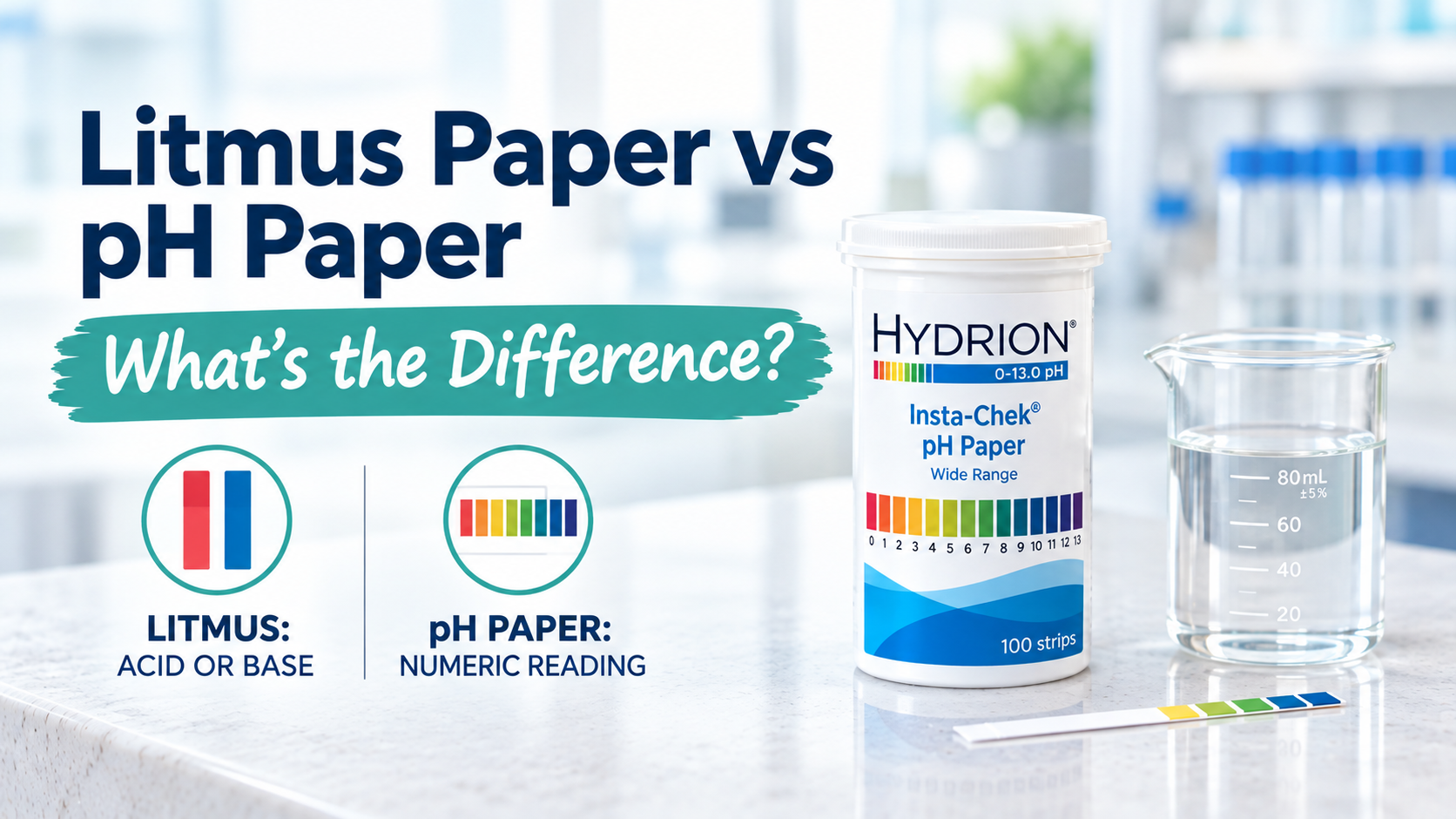
Litmus Paper vs pH Paper, What's the Difference
Ask a room full of students what litmus paper does and you'll probably hear it turns red or blue. That's true, but it's only part of the story. Litmus and pH paper are related, not identical, and swapping one for the other can cost you real data in a lab setting.
Key Takeaways
- Litmus paper tells you if a solution is acidic or basic. That's the only answer it gives.
- pH paper gives you an actual pH number by matching the strip color to a chart.
- Wide range pH paper reads each full pH unit and works great as a first check on an unknown sample.
- Need tighter accuracy? Short range pH paper reads each half pH unit.
- Litmus is fine for a basic classroom demo, while research, clinical and quality control work call for pH paper.
- Micro Essential Lab has made pHydrion pH papers in Brooklyn since 1934.
What Is Litmus Paper
Litmus paper is a simple acid base indicator. It comes in two forms, red and blue, and it does one job well. It tells you whether a solution is acidic or basic. Blue litmus turns red in acid. Red litmus turns blue in base. That's the entire range of information it gives you.
There's no in between reading, no numeric value and no way to tell how acidic or basic something actually is. Litmus paper answers a yes or no question, nothing more.
What Is pH Paper
pH paper works on the same basic idea, a chemical indicator that changes color based on the solution it touches, but it goes much further. Instead of one color change, pH paper uses a range of colors matched to a chart, giving you a specific pH value.
Wide range pH paper covers a broad span in one strip. It's built for a first check on an unknown solution, reading at each full pH unit. Short range pH paper, sometimes called narrow range, zeroes in on a smaller span with finer accuracy, reading at each half pH unit. That precision matters in water treatment, food science and clinical labs, where a specific number is the whole point.
Can You Use Litmus Paper Instead of pH Paper
Only if all you need to know is acidic versus basic, nothing more specific. A middle school science demo works fine with litmus paper. A lab tracking soil pH for a research project needs an actual number. So does a hospital monitoring a patient's urine pH. Litmus paper can't give you either.
Why Do People Mix These Two Up
Part of it is history. Litmus paper has been a classroom staple for generations, so a lot of people learn the word litmus before they ever hear pH paper, and the terms end up used interchangeably in casual conversation. Part of it is that both products look similar, small paper strips that change color when they touch liquid.
But the underlying chemistry is different enough that using the wrong one in a lab setting isn't just a wording mix up. It's a data quality issue.
Which One Should You Buy for Your Lab or Classroom
If your only question is acid or base, litmus paper is cheap, fast and does the job. For anything requiring an actual pH value, whether it's for research, quality control, water testing or education beyond a basic demo, pH paper is the right tool. Our wide range pH paper covers a full first pass reading, while our short range pH paper line narrows in on a specific pH band once you know roughly where a sample sits.
Micro Essential Lab Has Made pH Paper Since 1934
We've manufactured pHydrion pH papers out of Brooklyn since 1934, covering everything from broad wide range strips to tightly calibrated short range papers used in research and clinical settings.
If you want more background on how pH testing works before you buy, our introduction to pH article is a solid starting point, and our full pH paper lineup covers every range in between.