What Do Health Inspectors Check With Sanitizer Test Kits
A health inspector's visit doesn't have to feel like a surprise. Most of what they check around sanitizer is predictable once you know what's on the list. Here's what actually gets reviewed.
Key Takeaways
- Most inspectors bring their own test strips and dip them right into your sanitizer buckets, sinks and dish machine rinse water.
- Your sanitizer's label sets the required concentration, and that's the number inspectors check your reading against.
- Too strong is the most common sanitizer violation. Overdosing leaves chemical residue on food contact surfaces.
- Keep the right kit on hand. Quat sanitizer needs quat strips and chlorine needs chlorine strips.
- Larger kitchens like school cafeterias and hospital kitchens should expect inspectors to ask for a written sanitizer log.
- Strips at every station plus a regular logging schedule make this part of the inspection easy.
Do Inspectors Test Sanitizer Themselves
Yes. Most inspectors carry their own test strips and dip them directly into your sanitizer buckets, sinks or dish machine rinse water during a visit. They're checking that the concentration falls within the range required for your specific sanitizer type, not just that sanitizer is present.
What Concentration Range Do Inspectors Look For
This is the part that trips people up. There isn't one universal number for chlorine, one for quat and one for iodine. The required concentration comes from the sanitizer product's own label, since formulas differ by manufacturer. Inspectors check your reading against that label, not a generic chart.
What test strips need to do is cover the range your sanitizer actually falls in. Micro Essential Lab's Hydrion CM-240 chlorine dispenser reads 10 to 200 ppm, which covers most food contact sanitizing concentrations. Our broader chlorine test strips run all the way up to 10,000 ppm for higher strength disinfecting jobs.
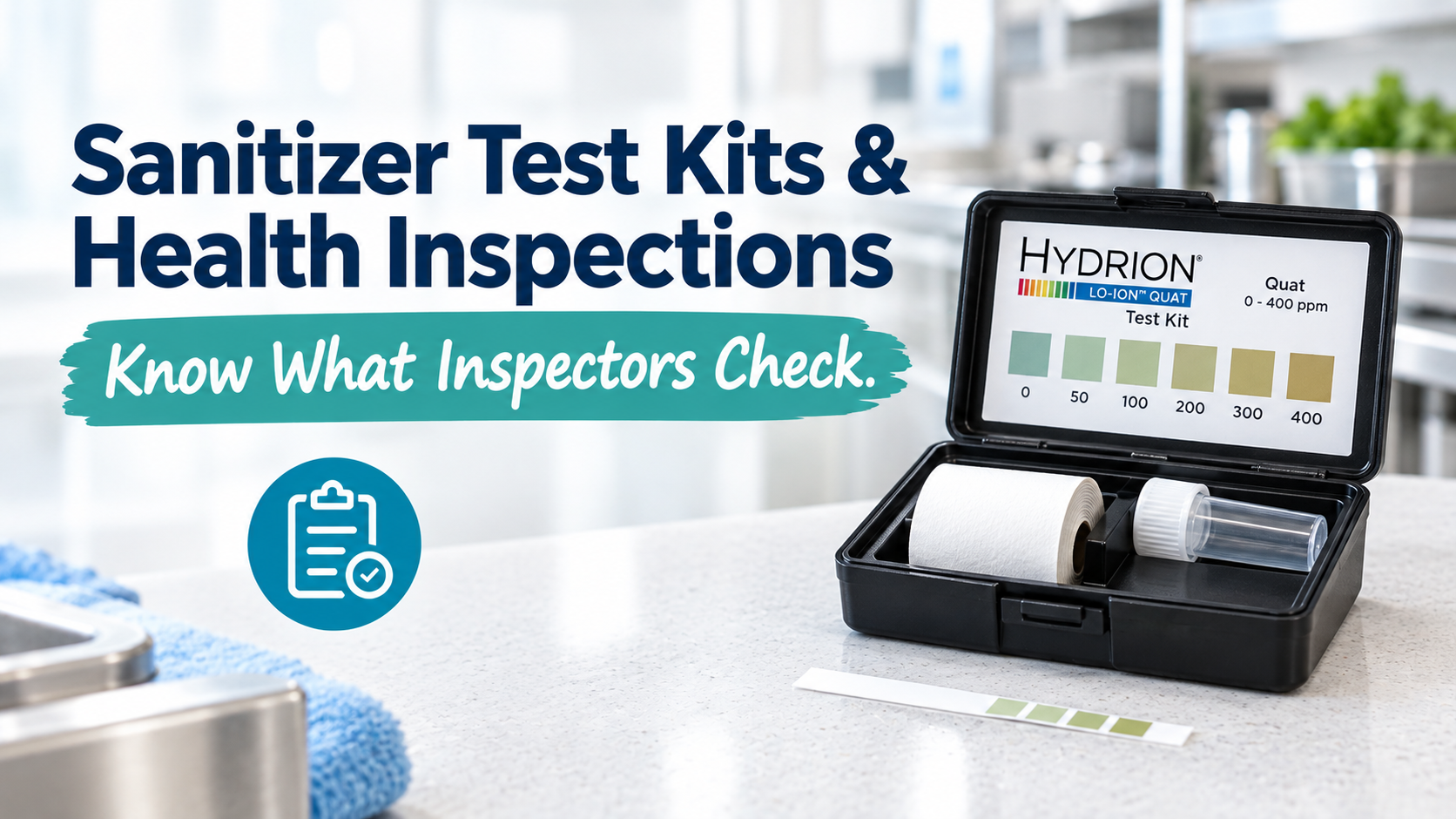
On the quat side, the Hydrion QT-10 covers 0 to 400 ppm. The Hydrion QC-1001 reads up to 1,000 ppm for stronger solutions. Our full lineup of quaternary test strips covers everything in between.
Iodine sanitizer is tested a bit differently. Micro Essential Lab's Hydrion IM-220 iodine dispenser reads 50 to 225 ppm. As always, match the strip's range to what your sanitizer label calls for, and keep that container labeled and visible so an inspector can check both at once.
Do Inspectors Check Your Own Test Records
Many do, especially in larger operations like school cafeterias, hospital kitchens and food processing facilities. A written sanitizer log shows that testing happens on a schedule, not just when an inspector shows up. Missing logs, or logs with obvious gaps, tend to raise more questions than a single low reading does.
What's the Most Common Sanitizer Violation
The most frequent issue isn't usually sanitizer that's too weak. It's sanitizer that's too strong. Staff sometimes assume more concentrated means safer, so they overdose the mixture. Quat and chlorine sanitizer both have upper limits, and going over them can leave chemical residue on food contact surfaces, which is its own violation.
Does the Type of Test Kit Matter to an Inspector
Yes. Inspectors expect the test kit on site to match the sanitizer actually in use. A kitchen using quat sanitizer needs quat test strips on hand, not chlorine strips left over from a previous supplier. If an inspector asks for your test kit and finds the wrong type, that gets flagged even if the sanitizer itself is mixed correctly.
How to Prepare for the Sanitizer Portion of an Inspection
A few habits make this part of an inspection painless.
- Keep test strips at every sanitizer station, not just one central spot
- Match your test kit's range to your exact sanitizer type and label concentration
- Log test results at consistent intervals, and keep that log somewhere the inspector can find it easily
- Store test strips away from heat and moisture, since old or degraded strips can give inaccurate readings
Micro Essential Lab Test Kits Built for Inspection Standards
We've manufactured pH and sanitizer test papers since 1934, and our test kits cover the concentration ranges inspectors actually check against.
Whether your kitchen runs chlorine, quat or iodine, our sanitizer and disinfectant test kits page can help you find strips built for your exact setup. If you're not sure which sanitizer fits your kitchen best, our guide on choosing a sanitizer for your food facility walks through the differences in plain language.