Wide Range vs Narrow Range pH Strips, Which Do You Need
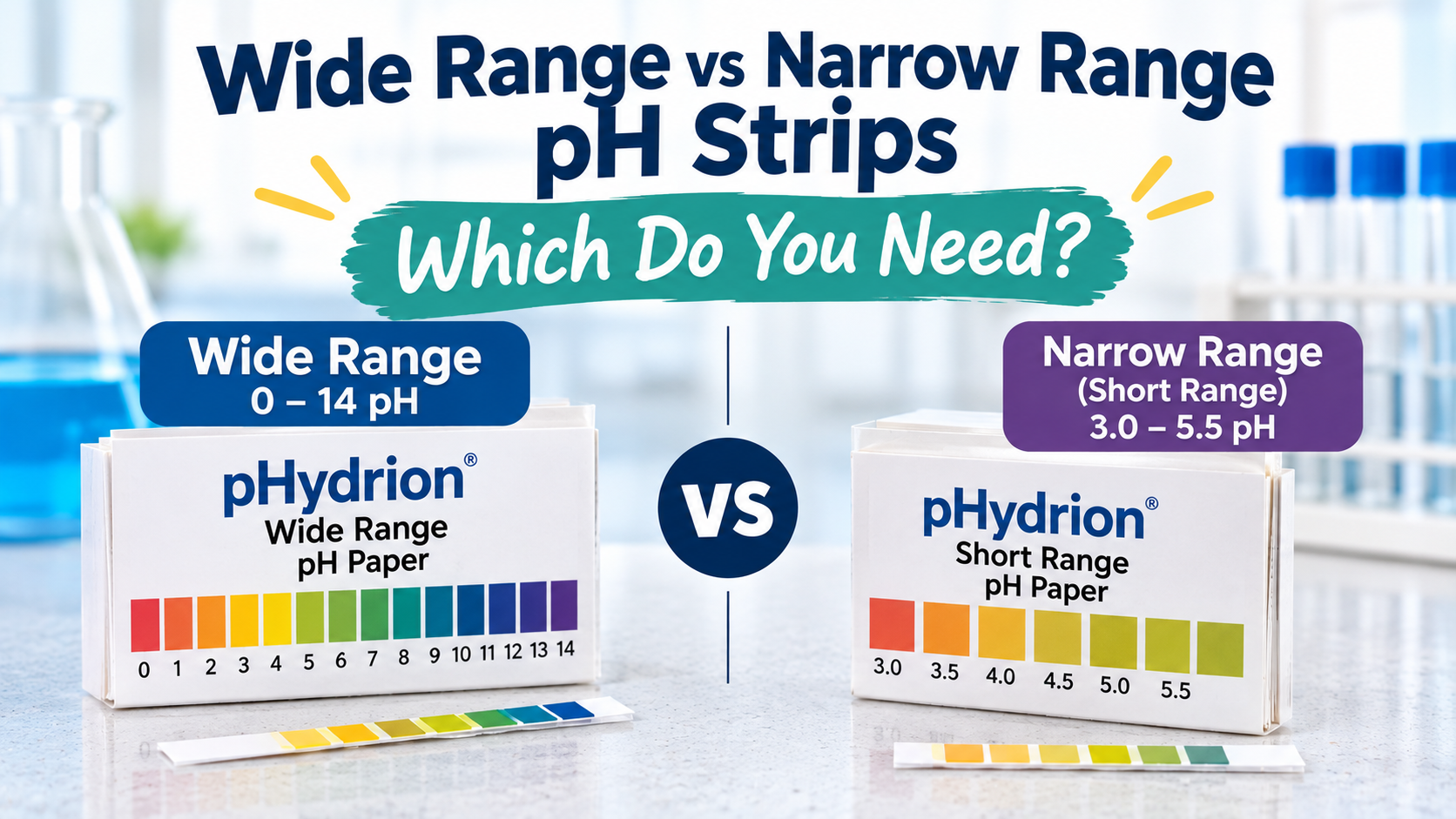
Every lab buyer eventually hits this question. Do you stock wide range pH paper, narrow range or both? The answer depends less on preference and more on what you're actually testing and how precise you need the result to be. Quick note on naming, most manufacturers, including Micro Essential Lab, sell the narrower option under the name short range pH paper, so that's the term you'll see on the product page.
Key Takeaways
- Wide range pH paper covers the full 0 to 14 scale and reads at each full pH unit. Use it for a first check on an unknown sample.
- Short range pH paper, what many buyers call narrow range, reads every half pH unit within a tighter band.
- Micro Essential Lab's short range bands include 3.0 to 5.5, 4.5 to 8.5, 6.0 to 8.0 and 6.5 to 13.0.
- Lots of labs test twice. Wide range finds the zone, then short range nails the number.
- Pick your short range band by sample type. Food and beverage often lands between 3 and 6, wastewater around 6 to 9.
- Most labs that test regularly keep both on the shelf.
What Is Wide Range pH Paper
Wide range pH paper covers a broad span of the pH scale, often the full 0 to 14 range, in one strip. It's built for a first pass on an unknown solution, giving you a general sense of acidity or alkalinity before you narrow things down further. Micro Essential Lab's wide range pH paper line reads at each full pH unit across that span.
Because it covers so much ground, wide range paper trades away precision. A reading might land you in a general zone rather than a specific decimal point.
What Is Narrow Range (Short Range) pH Paper
Short range pH paper, the term you'll find used on most manufacturer sites for what buyers often call narrow range, focuses on a smaller slice of the scale and reads more precisely within that window. Micro Essential Lab's short range pH paper products cover specific bands like 3.0 to 5.5, 4.5 to 8.5, 6.0 to 8.0 and 6.5 to 13.0, each reading at every half pH unit. It's the paper you reach for once you already have a rough idea what range you're working in and need a tighter reading.
When Should You Use Wide Range Paper
Wide range paper makes sense for initial screening. If a lab receives an unknown sample, wide range paper gives a fast first read without wasting a short range strip guessing blindly. It also works well in classroom settings and general quality checks where a precise decimal isn't the goal, just a general category.
When Should You Use Short Range Paper
Short range paper is the right call any time the actual number matters more than a general zone. Water treatment facilities monitoring specific compliance thresholds, food science labs tracking fermentation or preservation levels, and clinical settings checking bodily fluid pH all need the tighter accuracy short range paper provides.
A two step approach works well in a lot of labs. Test with wide range paper first to find the general zone, then follow up with the matching short range paper for a precise reading. It saves strips and gets you to an accurate number faster than guessing which short range band to grab first.
Does Buying Both Cost More
Not by much, and most labs that test regularly end up needing both anyway. A small stock of wide range paper for screening, paired with a couple of short range options covering the pH zones you test most often, covers nearly every situation without over ordering.
How Do You Know Which Short Range Band to Order
Check what you're actually testing. Soil samples in agricultural settings often land in the 5 to 8 range. Beverage and food production frequently falls between 3 and 6. Wastewater and water treatment commonly targets 6 to 9. If you're unsure, a batch of wide range paper first will point you to the right band, and our full short range pH paper catalog lists every span we carry.
Micro Essential Lab Makes Both Wide Range and Short Range Papers
We've manufactured pHydrion pH papers in Brooklyn since 1934, with both wide range and short range options calibrated for labs, water treatment, food production and clinical use. If you want more background on how pH testing works before ordering, our introduction to pH article covers the basics.