Do pH Buffers Need a Certificate of Conformance for Lab Use
If your lab operates under any kind of accreditation, ISO/IEC 17025, GLP or a similar standard, this question comes up eventually. Does the pH buffer solution you're calibrating with need paperwork behind it, or is the bottle itself enough?
Key Takeaways
- A certificate of conformance confirms a specific buffer batch matches the pH printed on its label.
- Labs accredited under ISO/IEC 17025 or following GLP need these certificates to show traceability.
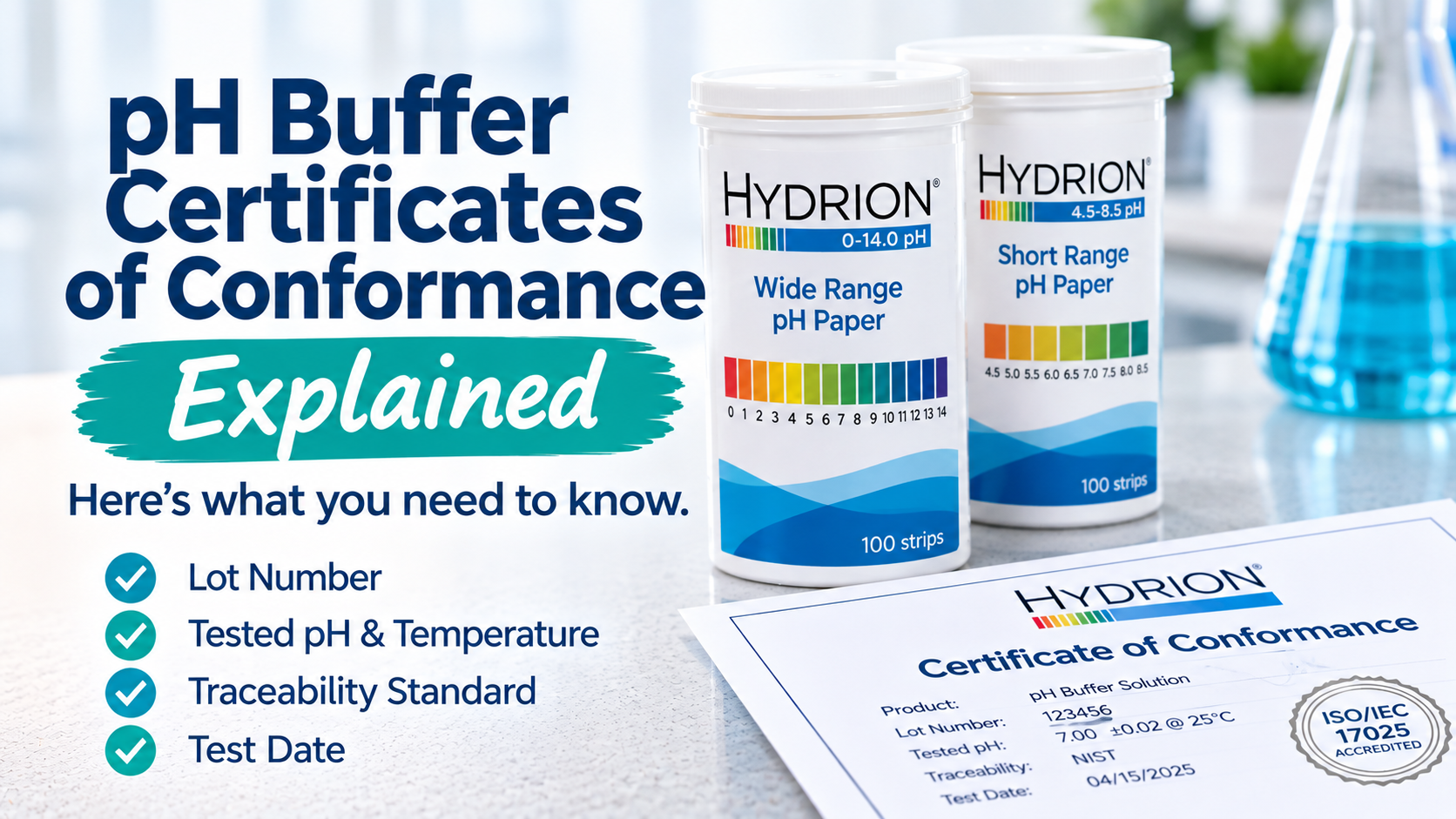
- Look for four things on the certificate, the lot number, the tested pH at a set temperature, the traceability standard and the test or manufacture date.
- Your pH meter is only as accurate as the buffer you calibrate it with.
- Auditors ask for buffer certificates when they review calibration records, so keep them on file.
- Micro Essential Lab buffers are traceable to NIST and certified to plus or minus 0.02 pH units at 25 degrees Celsius, backed by ISO/IEC 17025:2017 accreditation through A2LA.
What Is a Certificate of Conformance
A certificate of conformance, sometimes called a certificate of analysis or CoC, is a document from the manufacturer confirming that a specific batch of product meets stated specifications. For pH buffer solutions, that means confirming the buffer's actual pH value, tested and traceable, matches what's printed on the label.
Without that certificate, a lab is essentially trusting the label with no documentation behind it, which becomes a real problem the moment an auditor asks for traceability.
Do You Actually Need One
If your lab is accredited under ISO/IEC 17025, or follows Good Laboratory Practice guidelines, yes, you need documentation showing your calibration standards are traceable and verified. Regulatory bodies and auditors expect to see certificates of conformance for reference materials like pH buffers, not just a manufacturer's printed label taken at face value.
Even labs without formal accreditation benefit from keeping these certificates on file. If a calibration result is ever questioned, whether internally or by a client, a documented buffer verification removes any doubt about where the error came from.
What Should a Good Certificate Include
A proper certificate of conformance for pH buffer should show:
- The lot number matching your physical bottle
- The tested pH value at a specified temperature, since pH shifts with temperature
- The traceability standard used for testing
- The date of manufacture or testing
If a certificate is missing any of these, particularly the lot number match, it doesn't actually prove anything about the specific buffer you have in hand.
How Does This Connect to Lab Calibration
Calibration is only as good as the standard you calibrate against. If your pH meter is calibrated against a buffer with an unverified pH, every reading that meter produces afterward carries that same error forward. A certificate of conformance is the paper trail that confirms your starting point was accurate, which matters just as much as the calibration procedure itself.
What Happens During an Audit Without These Certificates
An auditor reviewing calibration records will typically ask for documentation tracing back to the reference standards used, including buffer solutions. Without a certificate of conformance on file, that traceability chain breaks, and it can call into question calibration results that otherwise look fine on paper.
Micro Essential Lab Provides ISO/IEC 17025 Accredited Buffers
Micro Essential Lab is accredited to ISO/IEC 17025:2017 through A2LA, and our pH buffer standards are directly traceable to NIST and certified to plus or minus 0.02 pH units at 25 degrees Celsius. That gives your lab the documentation an auditor expects to see.
If you need certificates for a specific buffer order, our Buffer Certificates of Conformance page has what you're looking for. If you're building out a calibration program and want to understand pH testing fundamentals first, our introduction to pH article is a good place to start.